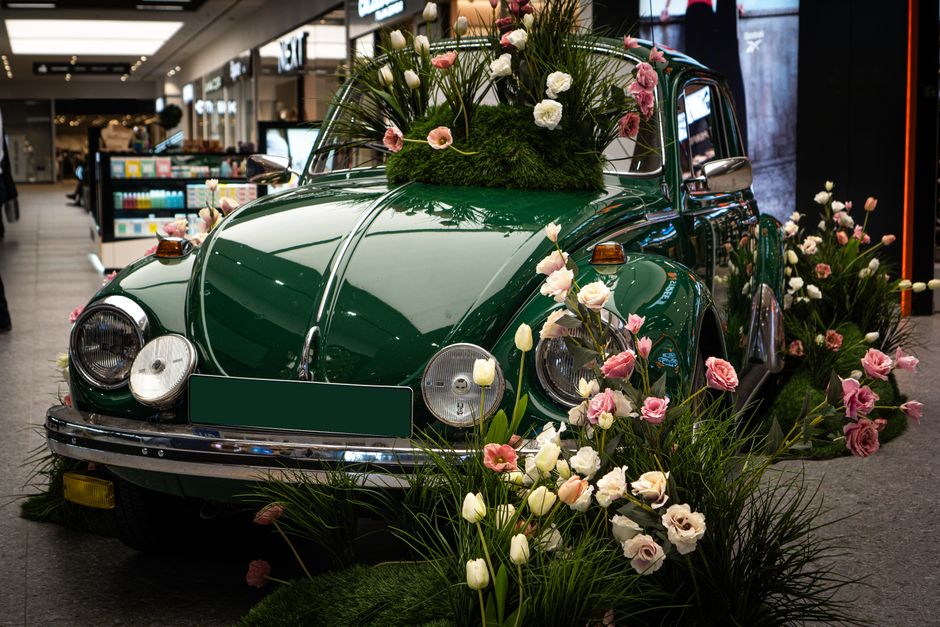
Permits and regulations for Harrow event floral displays
Posted on 14/10/2026
If you are planning Permits and regulations for Harrow event floral displays, the tricky part is rarely the flowers themselves. It is the venue rules, access arrangements, fire safety concerns, public space permissions, and the quiet little details that can turn a lovely display into a last-minute headache. Truth be told, most people only think about colour palettes and vase height until someone asks, "Do you have permission for that?"
This guide breaks the topic down in plain English. You will find out when permits may be needed, what local rules usually matter, how to work with venues and event organisers, and how to avoid common compliance problems. Whether you are decorating a wedding, corporate launch, community fair, memorial event, or seasonal celebration in Harrow, the aim is simple: keep the display beautiful, practical, and properly approved.
And yes, if you have ever stood in a hall at 7:30 in the morning with buckets of blooms and a tape measure in hand, you will know there is more to this than just "making it pretty".
Why Permits and regulations for Harrow event floral displays Matters
Florals at events look effortless when done well, but the rules around them are often anything but effortless. In Harrow, as in most parts of London, the need for permission depends on the type of event, the venue, the display size, where the flowers will sit, and whether the arrangement affects safety, access, or public areas.
Why does this matter so much? Because floral decor can become a trip hazard, block emergency routes, interfere with sightlines, or create issues with temporary structures. A tall entrance arrangement in a hotel lobby is one thing. A freestanding arch near a fire exit is another. Simple enough, really, but easy to miss in the rush.
It also matters because event organisers increasingly expect suppliers to be organised. They want proof that you understand insurance, access times, loading bay rules, waste disposal, and how your installations fit within venue conditions. If you are working on a wedding, a corporate event, or a public celebration, being able to explain your compliance approach builds trust fast.
There is also a commercial side. Well-managed compliance reduces delays, avoids wasted stock, and helps the event run smoothly. That means fewer awkward conversations on the day and a better chance the display lands exactly as intended. You can spend your energy on creativity instead of crisis control. Much nicer, frankly.
For event planners who need a wider floral range beyond regulations alone, it can help to review seasonal or occasion-based options such as wedding collections or broader display styles like luxury flowers when planning a more formal setup.
How Permits and regulations for Harrow event floral displays Works
The process usually starts with one basic question: where will the flowers be placed? That one detail changes everything. A display inside a private venue will usually involve venue approval rather than a council permit, while installations in a public park, street, pavement, or outside a building may need local authority permission or coordination with the landowner.
In practical terms, the steps often look like this:
- Identify the location - indoor, outdoor, private, or public.
- Check venue or site rules - many venues have their own decoration policy.
- Assess size and placement - height, width, fixings, and whether anything touches walls, floors, or furniture.
- Review safety requirements - fire exits, cabling, heating, dampness, and crowd flow.
- Confirm access and timings - delivery windows, unloading, and set-up restrictions matter more than people think.
- Secure written approval where needed - email confirmation is better than a vague "yes, that should be fine".
- Prepare contingency plans - weather, traffic, damaged stock, and last-minute venue changes happen.
If the display is part of a corporate event, it may also be useful to coordinate with broader event logistics, especially if multiple suppliers are involved. A clean handover between florist, planner, venue, and catering team saves time and prevents overlap. One person's "minor adjustment" can become everyone else's problem if nobody is aligned.
For recurring business events or hospitality setups, suppliers sometimes pair floral planning with standing ordering arrangements through corporate accounts, which can simplify repeat approvals and invoicing. That is not a legal requirement, of course, but it can make admin less painful.
Key Benefits and Practical Advantages
Getting permissions and regulations right does more than keep you out of trouble. It actually improves the final result.
- Smoother setup - fewer delays at the venue and less chance of being stopped on arrival.
- Better safety - arrangements are less likely to obstruct exits, walkways, or visibility lines.
- Reduced waste - when you know the size limits and placement rules, you buy more accurately.
- Stronger reputation - organisers remember the supplier who was calm, prepared, and easy to work with.
- Less risk of removal - nobody wants a beautiful display taken down because it was never approved.
- Cleaner budgeting - compliance issues can add labour, transport, and redesign costs; planning ahead helps avoid that.
There is a subtle but important benefit too: confidence. When you know what is permitted, you can design with purpose instead of second-guessing every stem. That makes creative decisions easier. You stop designing for hope and start designing for reality.
For example, a more compact arrangement using flowers in a vase may be the safest and most venue-friendly option for a tight reception desk, while a larger statement piece may suit a ceremony entrance where more space has been agreed. Matching form to compliance is just smart design.
Who This Is For and When It Makes Sense
This topic matters to a surprisingly wide group of people. If you are involved in any kind of event floristry in Harrow, it is worth understanding the rules before the first stem is cut.
- Wedding couples and planners working in hotels, halls, churches, marquees, or private homes.
- Corporate organisers decorating offices, conference rooms, reception areas, and hospitality spaces.
- Community event teams arranging displays for fairs, cultural celebrations, charity fundraisers, or seasonal festivals.
- Florists and floral stylists who need to deliver and install safely and on time.
- Venue managers who want to set clear rules without turning the process into a maze.
- Families planning memorial or funeral-related floral tributes where sensitivity and timing matter just as much as appearance.
It makes sense any time the flowers are more than a hand-held bouquet. As soon as there is an installation, a fixed placement, an event access restriction, or a public-facing display, the rules become part of the job. If you are only sending a gift bouquet to a home, the compliance burden is much lighter. If you are dressing a ballroom or public venue, it is a different story entirely.
For memorial and service settings, more structured tribute work may also need careful coordination with the venue or service organiser. In those cases, ranges such as funeral flowers or funeral flowers in Harrow Weald are usually chosen with ceremony timing, aisle space, and respect for the setting in mind.
Step-by-Step Guidance
Here is a practical way to handle permits and regulations without overcomplicating it. Nothing fancy. Just a sensible order that works.
1. Start with the venue or site owner
Ask whether the event space has its own floral policy. Many places do, even if they do not advertise it loudly. Hotels, places of worship, civic buildings, and wedding venues often have rules about candles, water vessels, floor protection, adhesives, and hanging items.
2. Define the display type clearly
Be specific. "A floral display" is too vague. Is it a pedestal arrangement, table centrepiece, entrance arch, hanging installation, aisle decoration, stage piece, or public-facing feature? The more clearly it is described, the easier it is to confirm approval.
3. Check whether public land is involved
If the display extends onto a pavement, roadside area, park, forecourt, or other public space, additional permission may be needed from the relevant local authority or land manager. Do not assume a spot outside the building is automatically included in the venue booking. It often is not.
4. Review safety and access issues
Look at the path of delivery trolleys, the width of doors, lift access, emergency exits, and where waste or packaging will be removed. Even a beautiful arrangement can create a problem if it narrows a route or leaves wet floors behind.
5. Confirm practical conditions in writing
Email is perfectly acceptable in most cases. Ask for written confirmation of what is allowed, where it can go, when setup can happen, and who is responsible for sign-off on the day. If the venue later changes its mind, you want a paper trail.
6. Build the design around the approved plan
Now design to fit the rules rather than hoping the rules will bend for the design. That tends to work better. For example, a modest table arrangement or colour-coordinated welcome piece may be easier to approve than an oversized structure requiring extra supports.
7. Prepare for delivery and teardown
Know your unloading route, parking restrictions, and collection time. If the display uses reusable mechanics, protect them from damage during removal. If flowers are being sent elsewhere afterwards, arrange transport in advance. You do not want blooms sitting in a hot van while someone hunts for the keys.
A small but useful tip: make one person responsible for compliance on the day. Not the whole team. One person. Otherwise everybody assumes someone else checked the loading bay, and that is how minor chaos begins.
Expert Tips for Better Results
Experience teaches you a few things that do not always show up in a checklist.
- Design for the venue first, then for the photo - the best-looking display in a picture may be the worst choice for a crowded entrance.
- Keep water management tidy - sealed bases, hidden reservoirs, and protective mats can save polished floors from stains.
- Choose flowers that travel well - sturdy varieties often perform better for long setup windows and warm rooms.
- Avoid overcomplicating fixings - if an installation needs too much tape, wire, or adhesive, it may be less venue-friendly than you think.
- Plan colour and fragrance with the event in mind - strong scents can be lovely, but not ideal in small enclosed spaces or dining areas.
- Have a backup stem plan - if a bloom arrives soft or bruised, you need a substitution that still fits the approved design.
One thing people often overlook is how flowers interact with the rest of the event. A dense arrangement near the top table can block speeches. A scented display near food service can be distracting. And yes, someone will always stand directly in front of the prettiest piece for a photo. That part is universal.
If you are choosing flowers for a formal or large-scale event, options from best sellers can be useful because they often reflect reliable, venue-friendly choices. When you need speed as well as compliance, same-day flower delivery in Harrow Weald can help with time-sensitive requests, although installation planning still needs to be done properly. Speed never replaces permissions. Never does.
Common Mistakes to Avoid
Most floral compliance problems are avoidable. The trouble is, they are the kind of mistakes that seem minor until they are not.
- Assuming the venue said yes to everything - approval for flowers does not always cover arches, candles, or floor-standing pieces.
- Ignoring access restrictions - a beautiful design is useless if it cannot get through the lift or into the room.
- Forgetting fire exits and circulation space - event layouts change, and so do the risks.
- Leaving approvals until the last minute - this creates pressure and limits design choices.
- Using unstable containers or stands - wobbly mechanics are nobody's friend, especially on a busy day.
- Not documenting the plan - verbal agreement alone can get messy if staff change or messages are lost.
- Overbuying flowers before sign-off - if the design is rejected, the stock may not suit another setting.
One of the most common slip-ups is treating a florist brief like a mood board rather than an operational plan. A mood board is helpful. But it is not permission. Not even close, really.
Another issue is failing to ask what happens after the event. Are flowers collected, donated, repurposed, or disposed of? If a display is large, the breakdown plan matters almost as much as the setup plan.
Tools, Resources and Recommendations
You do not need a complicated toolkit to manage compliance well. You need a few reliable habits and a decent system.
- Event brief template - include location, timings, access routes, display size, and contact names.
- Venue approval email - keep written permission in one place, ideally easy to find on your phone.
- Site plan or floor plan - especially useful for larger weddings and corporate functions.
- Delivery checklist - loading times, parking notes, lift codes, and teardown instructions.
- Moisture protection materials - trays, mats, waterproof wraps, and simple floor protection can save awkward damage claims.
- Backup design options - smaller arrangements, alternate containers, or simplified mechanics for tighter venues.
For general preparation, it can also help to review practical flower handling and care guidance such as flower care. That is especially useful if the display has to last through a long event day, warm lighting, or travel between locations.
If the event includes gifts for guests, donors, staff, or speakers, small takeaway items can be planned separately without interfering with the display permissions. The point is to keep the installation plan distinct from the gifting plan. It sounds obvious, but people mix them up more than you might think.
Law, Compliance, Standards, or Best Practice
This is the part where caution matters. Specific legal requirements depend on the location, the venue, and the nature of the event, so it is not sensible to claim one fixed rule set covers every floral display in Harrow. That said, a few broad UK best-practice principles are highly relevant.
First, duty of care matters. Anyone organising an event has a responsibility to avoid foreseeable hazards. In floral work, that usually means making sure arrangements do not create trip hazards, block exits, fall over easily, or interfere with access for staff and guests.
Second, fire safety should always be considered. Even when flowers themselves are not flammable in a practical sense, the way they are displayed can affect fire routes, nearby heat sources, or the placement of candles and electrical equipment. A venue may have very specific conditions around this. Listen to those conditions, even if they feel fussy.
Third, structural safety is part of floristry on larger events. Anything freestanding, suspended, or fixed to another surface should be stable and suitable for the site. If an arch or backdrop needs weights, bracing, or special fixings, that needs checking before installation day, not during it.
Fourth, accessibility matters. Floral decor should not create unnecessary barriers for wheelchair users, parents with pushchairs, or guests with limited mobility. What looks elegant to one person can become a nuisance to another if it narrows a corridor or hides signs.
Fifth, venue terms and event contracts count. Even where no council permit is needed, the venue's rules still apply. If the contract says no open flames, no adhesive on walls, or no floor-standing structures in certain areas, those instructions are binding for the event setup.
If you are unsure whether a floral element needs permission, treat the uncertainty as a signal to ask early. A five-minute conversation can save a five-hour redesign.
Best practice in this area is simple: get approval in writing, design to the site, plan the delivery route, and build in a fallback. That combination is boring in the best possible way. It keeps the event calm.
Options, Methods, or Comparison Table
Different event flower setups carry different levels of administrative and practical effort. Here is a simple comparison to help you decide what is likely to need the most attention.
| Display type | Typical permission level | Main compliance concerns | Best use case |
|---|---|---|---|
| Table centrepieces | Usually venue approval only | Spillage, height, scent, table space | Weddings, dinners, receptions |
| Entrance arrangements | Venue approval, sometimes access review | Visibility, crowd flow, stability | Corporate events, ceremonies, launches |
| Large arches or backdrops | Detailed approval needed | Fixings, weight, fire routes, install time | Photo areas, weddings, branding moments |
| Outdoor public displays | May require local authority or landowner permission | Weather, public access, anchoring, liability | Street-facing events, festivals, civic occasions |
| Memorial or tribute arrangements | Venue or service organiser approval | Timing, placement, respect, aisle space | Funerals, remembrance events, ceremonies |
If you are choosing between simpler and more elaborate florals, do not just think about aesthetics. Think about who has to carry them, where they will stand, how long they will sit, and what happens if a room is tighter than expected. The simpler option often wins for a reason.
Case Study or Real-World Example
Here is a realistic example based on a common Harrow event scenario.
A small corporate team is hosting a client reception in a local venue. They want a floral welcome display, two medium table arrangements, and a photo backdrop near the entrance. At first glance it sounds straightforward. But once the team checks the layout, they realise the entrance is also the main access point for catering deliveries and guest check-in. The backdrop, as originally planned, would have narrowed the space and sat too close to a fire exit.
The florist and organiser adjust the plan. The backdrop is moved further into a designated corner, the welcome display becomes a slimmer arrangement, and the table flowers are designed in low containers so sightlines remain open. The venue approves the revised layout, and the setup goes ahead without issue.
Nothing dramatic happened. That was the point. The event felt calm, the flowers looked polished, and nobody had to improvise with a roll of tape in the final ten minutes. A quiet success. Those are the good ones.
In a wedding setting, a similar principle applies. A couple may love a tall floral statement piece, but if the ceremony room is compact, the safer choice may be a lower arrangement or a carefully positioned aisle feature. The flowers can still feel abundant and elegant. They just fit the room, which is half the battle.
Practical Checklist
Use this checklist before confirming any event floral display in Harrow:
- Have I identified whether the display is indoors, outdoors, private, or public?
- Have I checked the venue's floral or decoration policy?
- Do I know exactly where the flowers will be placed?
- Have I confirmed whether the display affects exits, entrances, or walkways?
- Do I have written approval from the venue or site owner?
- Have I checked access times, loading rules, and parking arrangements?
- Are the containers, stands, or mechanics stable and appropriate for the space?
- Have I considered water protection, floor care, and spill prevention?
- Is the scent level suitable for the room and event type?
- Do I have a backup plan if a bloom, container, or layout changes at short notice?
- Have I arranged teardown, waste removal, or collection after the event?
- Have I shared the final plan with everyone who needs to know?
Keep it simple, but keep it complete. That is usually the sweet spot.
Get a free quote today and see how much you can save.
Conclusion
Permits and regulations for Harrow event floral displays are not there to make life difficult. They exist to keep events safe, workable, and properly coordinated. Once you understand the venue rules, access needs, and any public-space permissions, floral planning becomes much easier and a lot less stressful.
The best results usually come from early questions, clear written approval, and designs that respect the venue rather than fight it. That is the quiet professional edge people notice. Not just the pretty flowers, but the calm way everything fits together.
And if you are still at the planning stage, that is actually a good place to be. It means there is time to get it right, and a well-planned display always feels better in the room. Always.
Frequently Asked Questions
Do I always need a permit for floral displays at an event in Harrow?
No, not always. Many indoor floral displays only need venue approval rather than a formal permit. Public spaces, outdoor installations, or anything affecting access or safety may need additional permission.
Who is responsible for checking permits and regulations?
Usually the event organiser is responsible, but florists and venue managers should all be aligned. In practice, it works best when the organiser confirms the rules and the florist designs within them.
What kinds of floral displays are most likely to need approval?
Large arches, hanging pieces, outdoor installations, public-facing displays, and arrangements near exits or entrances are the ones most likely to require specific approval. Smaller table arrangements are usually simpler.
Can I place flowers outside a venue if they are on private property?
Not automatically. Even on private property, you still need the landowner or venue's permission. If the flowers affect a pavement, shared area, or public route, extra checks may be needed.
What should I ask the venue before ordering the flowers?
Ask about decoration policy, access times, delivery routes, height limits, fire exits, water restrictions, floor protection, and whether any fixings are allowed. Those questions save a lot of last-minute guesswork.
Are there fire safety rules for floral event setups?
Yes, and they matter. Flowers should not block fire exits or create hazards near heat sources, candles, or electrical equipment. The venue may also have its own rules about materials and placement.
How far in advance should I check regulations?
The earlier the better. For modest setups, a few days may be enough if the venue is responsive. For weddings, corporate launches, and public events, it is wise to start as soon as the venue is booked.
What happens if a display is not approved on the day?
It may need to be moved, reduced, or removed entirely. That can be frustrating, especially after all the prep work. Written approval helps prevent this, which is why it is worth chasing before the event.
Do memorial or funeral floral displays follow different expectations?
Often yes, because timing, placement, and respect for the service setting are especially important. The rules are still about access and safety, but the tone of the display and coordination with the venue matter a great deal too.
Is a floral backdrop harder to approve than table flowers?
Usually yes. Backdrops and arches are larger, more structural, and more likely to affect movement or fire routes. Table flowers are generally simpler, especially if they are low and stable.
What is the biggest mistake people make with event floral compliance?
The biggest mistake is assuming the venue approval is broad enough to cover everything. It often is not. Always confirm the exact placement, size, and setup details rather than relying on a general yes.
Can a florist help with the approval process?
Absolutely. A good florist can describe the design clearly, flag likely issues, and suggest alternatives if the first idea is not suitable. That kind of practical input is worth a lot on busy event days.
How do I balance compliance with a creative floral design?
Start with the site rules, then build creatively within them. That approach may sound limiting at first, but it often leads to smarter, more elegant results. Constraints can sharpen the design, oddly enough.
What if I need flowers delivered quickly for a compliant setup?
Fast delivery can help with timing, but it does not replace planning. If you need a speedy option, make sure the display still fits the venue rules and the installation window. A rushed setup still needs to be a safe one.